
How The Last Thing She Saw Began
My husband, his two sisters, and I took a spur-of-the-moment trip to New Orleans. At the time, I'd been toying with the idea for a novel, but I didn't have a setting, a mystery, or much of anything else.
I knew I wanted to write about a woman who gained an unusual gift after an accident. I've always loved paranormal stories. Shows like Medium and Ghost Whisperer have been favorites of mine for years. Honestly, I've probably watched them far too many times.
When we decided to visit New Orleans, I started researching the city's history. I kept asking myself the same question.
What unusual piece of New Orleans history could become the heart of a novel?
Then I found it.
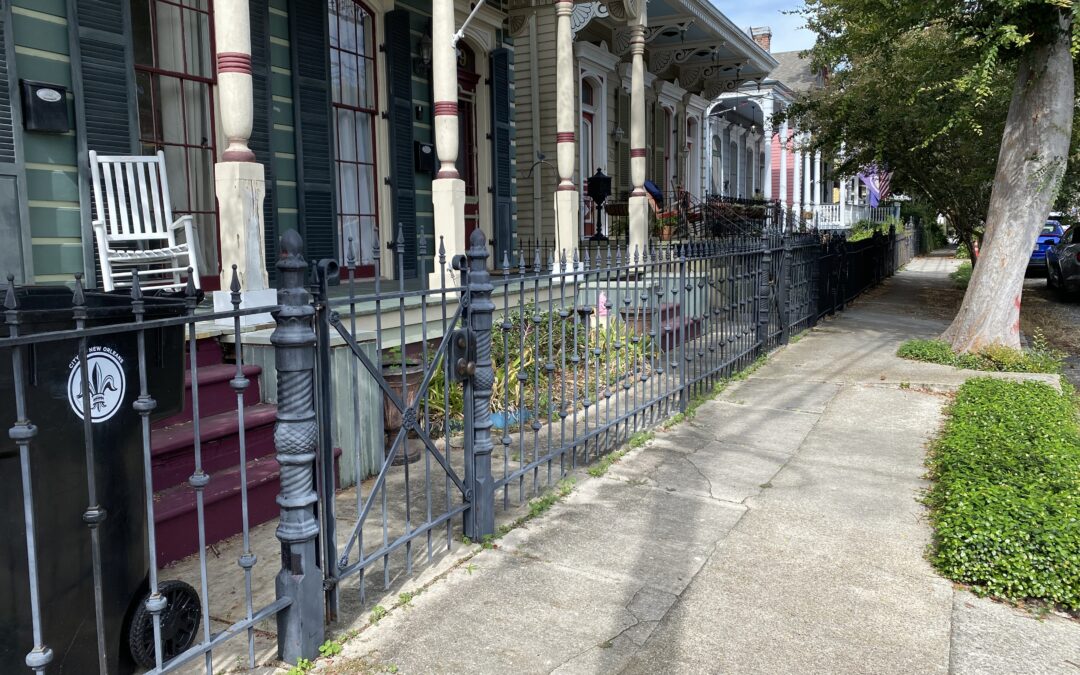
Just across the Mississippi River is a neighborhood called Algiers Point. You can take the ferry across, and that's exactly what we did. It's a beautiful, quiet neighborhood filled with historic homes, towering oak trees draped in Spanish moss, and even Mardi Gras beads hanging from the branches.
As we wandered the streets, I couldn't stop imagining stories hiding behind every front porch and weathered fence.
If those descriptions sound familiar later, well... now you know where they came from.
That was the moment the story really began.
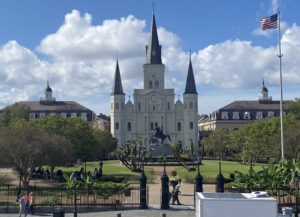
We also took a city tour, and I learned all kinds of fascinating things about New Orleans.
For example, did you know the statue of Andrew Jackson in Jackson Square was the first equestrian statue in the world where the horse was balanced entirely on its hind legs without hidden supports?
I didn't either.
And here's another fact that completely fascinated me.
Do you know how those famous above-ground tombs in New Orleans work?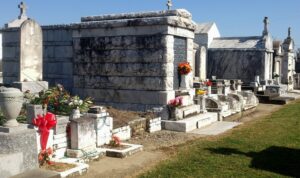
They aren't simply family burial vaults. Because of the intense Louisiana heat, the sealed crypts can reach temperatures of around 200 degrees, creating a natural process that greatly accelerates decomposition. Families own these tombs for generations, which is why New Orleans has the "Year and a Day" rule. A tomb cannot be reopened until one year and one day after a burial. When it is reopened for another family member, the remaining bones and ashes are respectfully moved to a lower chamber in the back, making room for the next casket.
That means a single family tomb can be used for generations.
History like that is a mystery writer's dream.
Even after our tour, I knew I needed more research.
Since I couldn't disappear into the city doing research while my family was on vacation, I spent the following months reading books, searching online, and making phone calls.
One of those calls was to the original founder of the Algiers Point Historical Society. He was incredibly generous with his time and helped me make sure the historical details in the novel were accurate.
Once I thought I'd done enough research, I finally sat down to write.
The truth is...
I had absolutely no idea what I was doing.
So I simply started.
I wrote the backstory first. I knew the mystery I wanted to tell, I knew the twist, and I had a rough idea of how it would end.
Everything else had to reveal itself along the way.
Even my main character's name changed several times.
Eventually, I decided to stop forcing it and let her tell me who she was.
I know that sounds a little strange, but here's what happened.
I sat quietly at my desk and thought about the character. After a few moments, I could see her as clearly as if she were standing in front of me. About 5'7", dark curly hair, average build, blue eyes. Then she started talking.
And I started taking notes.
She told me about her grandmother, how she discovered her gift, her best friend, her mentor, and pieces of her life that I hadn't planned at all.
That's how Lucy Brown was born.
We'll talk more about the other characters in future posts because many of them changed quite a bit before the book was finished.
This novel was many years in the making.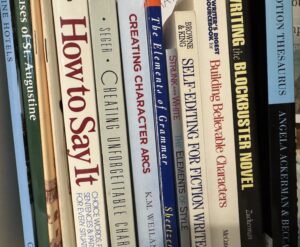
For a long time, fear of failure kept me from writing it.
Instead of working on the novel, I filled my time with other projects. Looking back, I realize procrastination was simply fear wearing a different disguise.
What if no one liked it?
What if no one wanted to read it?
What if people thought it was terrible?
Those questions can stop you before you ever begin.
Eventually, I decided those questions didn't matter anymore.
I wrote the story I wanted to read.
I joined a writers' group, and it was, without question, the best decision I made. I met talented local writers who helped me strengthen my story while teaching me more about the craft than I ever could have learned on my own. I also bought books and borrowed countless others from the library, determined to understand everything from story structure and character development to pacing and dialogue. I wanted to make sure I wasn't leaving out anything a reader would need to fully experience the story.
Today, I still tear up at certain scenes when I reread them. To me, that's the sign of a story that came from the heart.
Whether readers laugh, cry, or stay up far too late because they can't put it down, I hope they enjoy following Lucy's journey as much as I enjoyed writing it.
Thank you for coming along with me.
I have a feeling we're going to have a lot of fun exploring everything that went into creating The Last Thing She Saw.


